10 Essential Tips for Choosing Automotive Display Panels
Choosing the right automotive display panels is crucial for both aesthetics and functionality. These panels serve as the heart of vehicle interfaces. They deliver vital information to drivers while enhancing the overall driving experience. With numerous options on the market, making a decision can feel overwhelming.
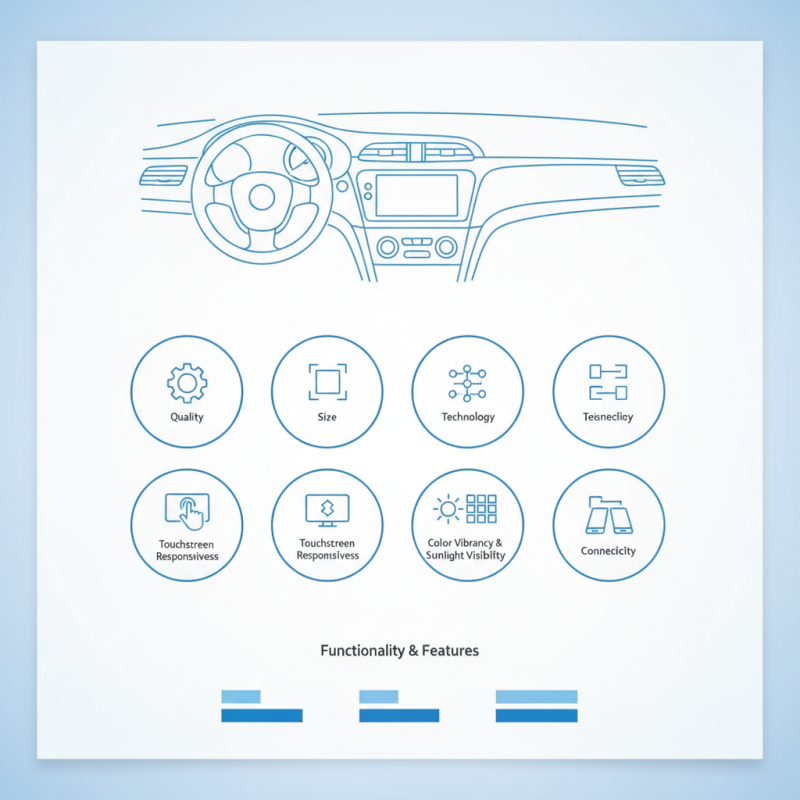
Quality, size, and technology are key factors to consider. Many drivers overlook the importance of touchscreen responsiveness. It's essential for ease of use. Color vibrancy and visibility in sunlight cannot be ignored either. Not all panels perform equally in different lighting conditions. A lack of attention to detail can lead to a frustrating experience on the road.
Functionality goes beyond visual appeal. Automotive display panels should include multiple features. Connectivity options that integrate with smartphones and other devices are increasingly important. Yet, not all panels accommodate this effectively. Ultimately, striking the right balance between style and utility is vital for any vehicle.
Understanding the Different Types of Automotive Display Panels
When choosing automotive display panels, it's vital to understand their differences. Display panels come in various types, each serving unique purposes. LCD screens, for example, are common due to their clarity and brightness. OLED panels offer superior contrast and slimmer designs, making them appealing for high-end vehicles. However, these screens can be costly. Different materials used can also affect durability and visibility under sunlight.
Consider the environment where the display will be used. Will it face direct sunlight? Understanding this will help in choosing the right panel. Some screens perform poorly in bright light, which could impair visibility while driving.
Tip 1: Evaluate your needs. A display for navigation may differ from one meant for entertainment. Know your priorities.
Tip 2: Keep budget in mind. The latest technology may be tempting. Yet, balancing features with cost is crucial.
Tip 3: Research installation options. Some panels integrate easily, while others might require extensive modifications. Think about the effort and time involved.
Key Features to Consider in Automotive Display Panels
When selecting automotive display panels, several key features warrant attention. Display resolution is crucial for clarity. Research shows that high-resolution screens can enhance driver experience significantly. A 2022 report highlighted that 85% of consumers prioritize screen quality when choosing a vehicle.
Touch sensitivity is equally important. A 2023 survey indicated that 70% of users find responsive touch interfaces enhance usability. However, some panels can be overly sensitive, leading to accidental inputs. It's critical to strike a balance here. Brightness and visibility under sunlight are also essential. Around 60% of drivers report difficulty reading displays in bright conditions.
Another consideration is screen size and layout. A larger display can provide more information at a glance but may distract drivers. Studies suggest that 40% of drivers feel overwhelmed by too much information. Integration with mobile devices is vital as well. In 2023, data revealed that 55% of users prefer display panels that seamlessly connect to their smartphones. Yet, not all systems offer this feature intuitively, leaving some users frustrated.
10 Essential Tips for Choosing Automotive Display Panels
Assessing Compatibility with Vehicle Systems and Interfaces
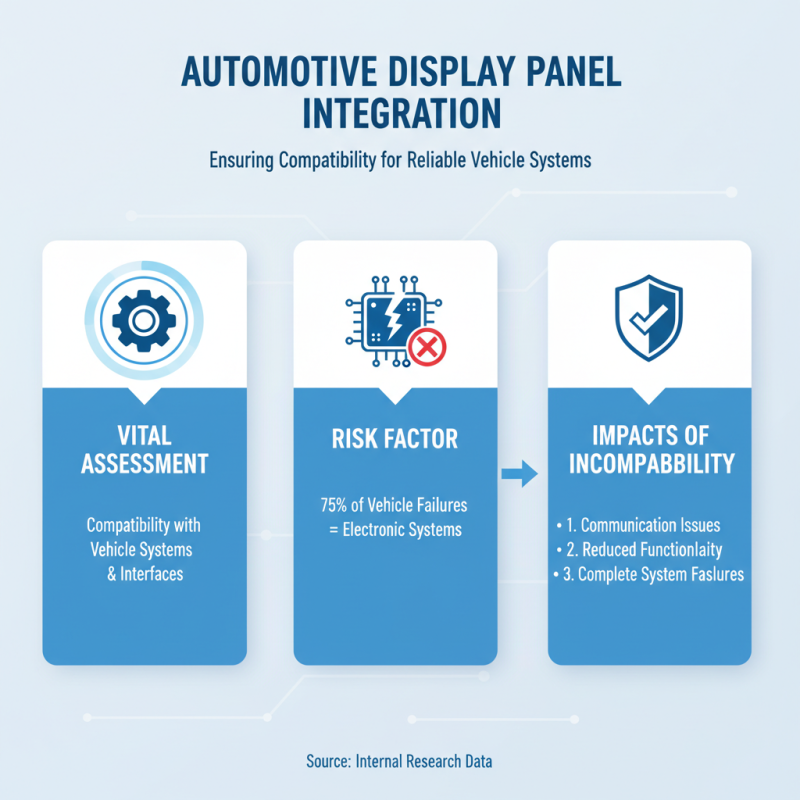
When selecting automotive display panels, assessing compatibility with vehicle systems and interfaces is vital. Research shows that nearly 75% of vehicle failures relate to electronic systems, emphasizing the importance of proper integration. An incompatible display can lead to communication issues, reduced functionality, or even complete system failures.
Consider the display interface protocols. Make sure the panel supports the vehicle's data bus standards. Many vehicles rely on CAN (Controller Area Network) or LIN (Local Interconnect Network) protocols. Choosing a panel that does not support these can limit functionality. Ensure the screen resolution meets expectations. A crisp display enhances usability and driver experience.
Conduct compatibility tests in various environments. Screens may behave differently under extreme temperatures or humidity. According to industry studies, displays not rigorously tested may fail prematurely. Seek feedback from automotive engineers on their experiences to mitigate potential pitfalls. Always prioritize compatibility to avoid costly replacements and repairs. Remember that a well-integrated display can enhance the vehicle's overall performance, making it a worthwhile investment.
Evaluating Display Performance: Brightness, Resolution, and Viewing Angles
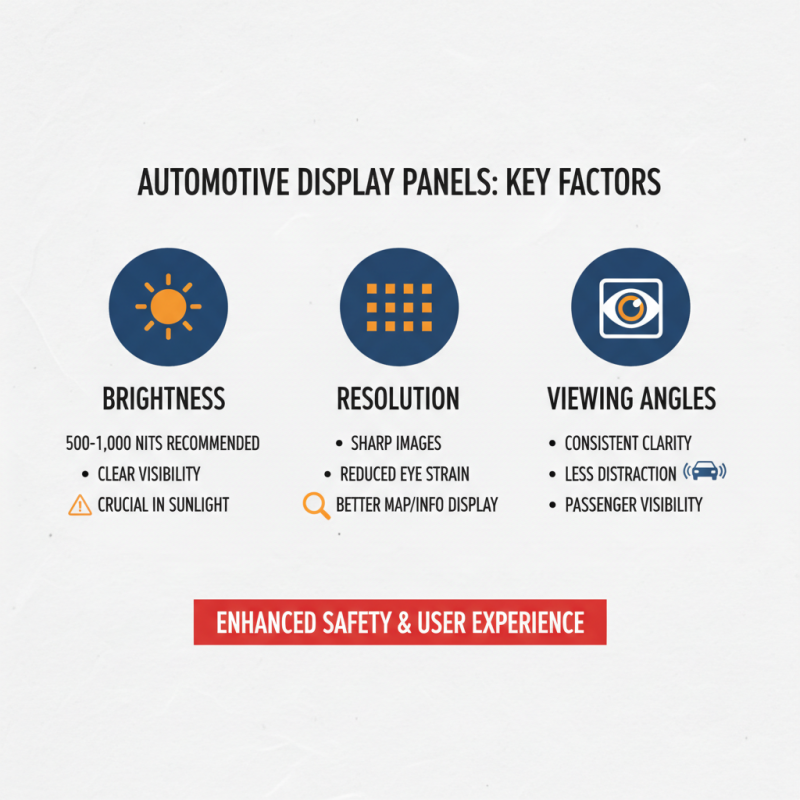
When evaluating automotive display panels, brightness, resolution, and viewing angles are crucial factors. Studies show that optimal brightness levels range from 500 to 1,000 nits for clear visibility in varying light conditions. A display that struggles with brightness may lead to operational challenges, especially in bright sunlight. Moreover, screens with limited brightness could distract drivers, amplifying safety concerns.
Resolution plays a significant role too. High-resolution displays, ideally at least 1920x1080 pixels, ensure that information is sharp and easy to read. Reports indicate that impressive resolution enhances the user experience, particularly for navigation systems. However, car manufacturers often overlook this, thinking higher resolution is a luxury rather than a necessity.
When selecting a display, consider viewing angles. An ideal viewing angle of at least 160 degrees is needed to ensure all passengers can see the display without distortion. Poor viewing angles could lead to misinterpretation of urgent information. For best results:
- Test the display in different environments. Adjust settings as needed.
- Avoid displays that show significant color shifts at wide angles.
- Prioritize user feedback to understand real-world performance.
Being mindful of these aspects can enhance both functionality and safety in automotive technology.
Analyzing Cost vs. Benefit for Automotive Display Panel Choices
Choosing the right automotive display panels requires a careful analysis of cost versus benefit. According to recent industry reports, the global automotive display market is expected to reach $30 billion by 2025, driven by increasing consumer demand for advanced features. Yet, not all displays deliver equal value. Brightness, resolution, and touch sensitivity can greatly affect performance and user experience, impacting sales and customer satisfaction.
While low-cost options may seem attractive, they often compromise on critical features. For instance, a study by TechInsights shows that displays with poor sunlight visibility can lead to a 20% increase in user frustration. This frustration can translate to lower retention rates. Additionally, investing in a high-quality display panel does not just enhance aesthetics; it can also improve functionality, which is crucial in safety applications like backup cameras. The choice of materials and technologies shapes durability and lifespan, making the initial investment more justifiable over time.
However, the balance is delicate. Investing heavily in cutting-edge technologies can lead to higher vehicle costs, which may deter potential buyers. Some manufacturers favor simpler displays, prioritizing cost reduction over technological advances. This approach can lead to missed opportunities in market segments where consumers value innovation. Reassessing these choices regularly is vital as market trends evolve.
10 Essential Tips for Choosing Automotive Display Panels
| Tip |
Cost Factor |
Benefit Factor |
Estimated Price Range |
| Consider Size and Resolution |
Medium |
High visibility and detail |
$300 - $800 |
| Evaluate Display Technology |
High |
Brighter, clearer image |
$500 - $1200 |
| Consider Touchscreen Capability |
Medium |
Enhanced user interaction |
$300 - $700 |
| Check for Compatibility |
Low |
Ease of installation |
Free - $100 |
| Prioritize Durability |
High |
Longer lifespan and reliability |
$400 - $900 |
| Assess Power Consumption |
Medium |
Reduced operational costs |
$250 - $600 |
| Consider Sunlight Readability |
Medium |
Better visibility in outdoor conditions |
$400 - $800 |
| Evaluate Integration with Vehicle Systems |
High |
Seamless user experience |
$600 - $1500 |
| Assess Warranty and Support |
Low |
Peace of mind for maintenance |
Varies |
| Read Customer Reviews |
Low |
Insight into real-world performance |
Free |

 +86-13662287276